History
The Olive Tree: A Journey Through Time
From Ancient Roots to the Golden Oil
A tree older than history
Long before written history, the olive tree took root around the Mediterranean. Adapted to dry summers, rocky soils and changing seasons, it became one of the most enduring symbols of the region.
Its silver-green leaves shimmer beneath the sun. Its roots reach deep into the earth, searching for water and anchoring themselves through generations of wind, drought and rain. Its fruit, small and bitter when freshly picked, contains the promise of something extraordinary.
For thousands of years, people have cultivated the olive tree, learning to transform its fruit into oil. Over time, olive oil became far more than a food. It was used for illumination, medicine, cosmetics, religious ceremonies, preservation and trade.
Few agricultural products have accompanied humanity for so long, or become so deeply intertwined with its history.
The origins of olive cultivation
The earliest cultivation of olives developed in the eastern Mediterranean, where people gradually learned to select trees with desirable characteristics and propagate them through cuttings and grafting.
Wild olive trees became cultivated orchards. Their cultivation spread from island to island, along coastlines and through ancient trading networks.
The Phoenicians were among the great maritime traders of antiquity. As they travelled across the Mediterranean, they carried olive products alongside wine, pottery and other valuable goods. Olive oil became an important commodity, traded between distant communities and civilizations.
Its value was recognised not only for its nutritional qualities but also for its versatility. A single product could nourish people, illuminate homes, care for the body and serve religious purposes.
The olive tree was becoming an essential part of Mediterranean life.
Olive oil in ancient civilizations
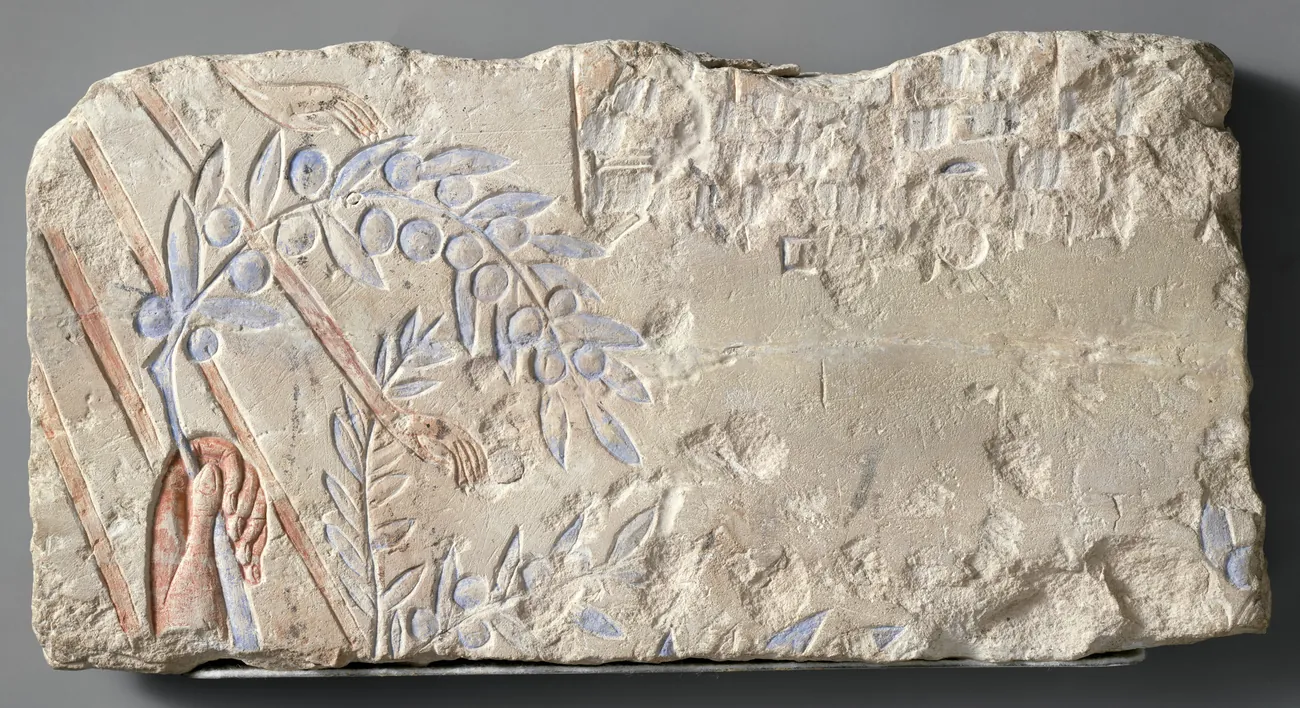
In ancient Egypt, olive oil was valued for cosmetics, perfumes and religious ceremonies. Oils were used in personal care and in preparations associated with burial and purification.
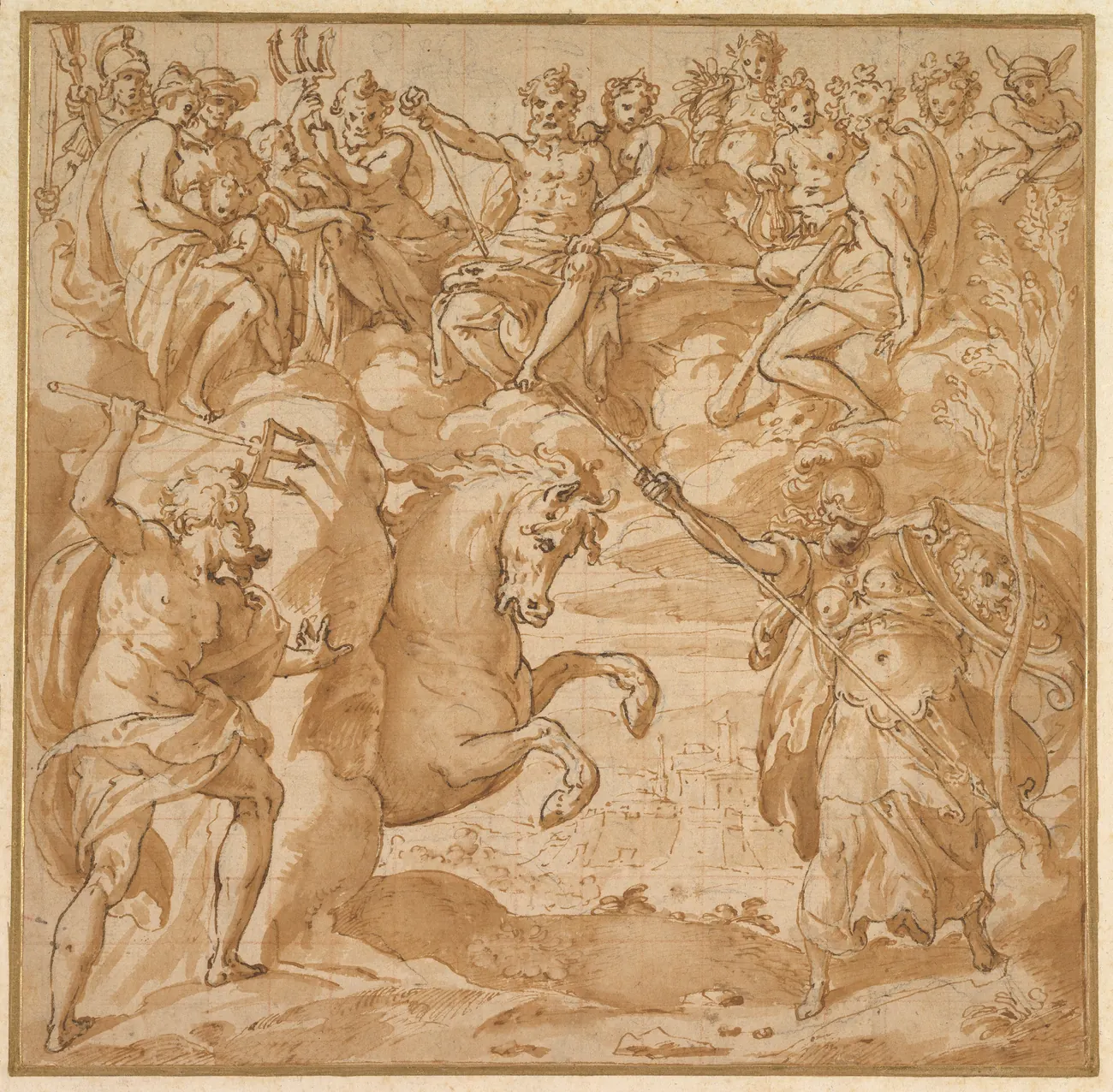
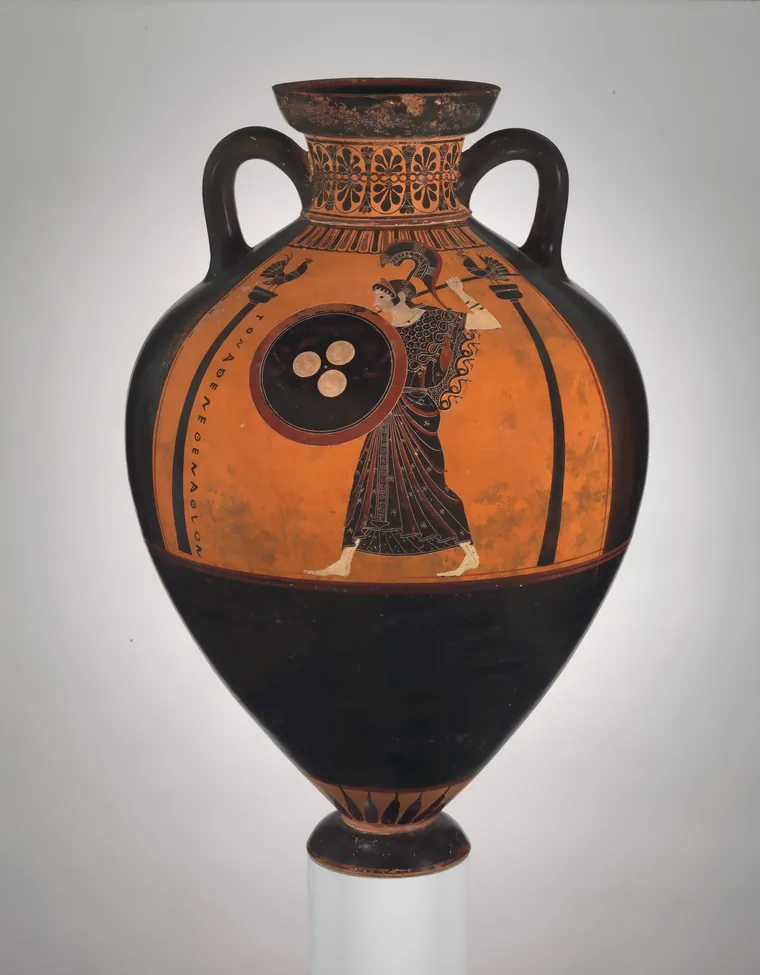
In ancient Greece, the olive tree acquired extraordinary significance. It became associated with Athena, goddess of wisdom, and the sacred olive tree was considered a symbol of prosperity and protection.
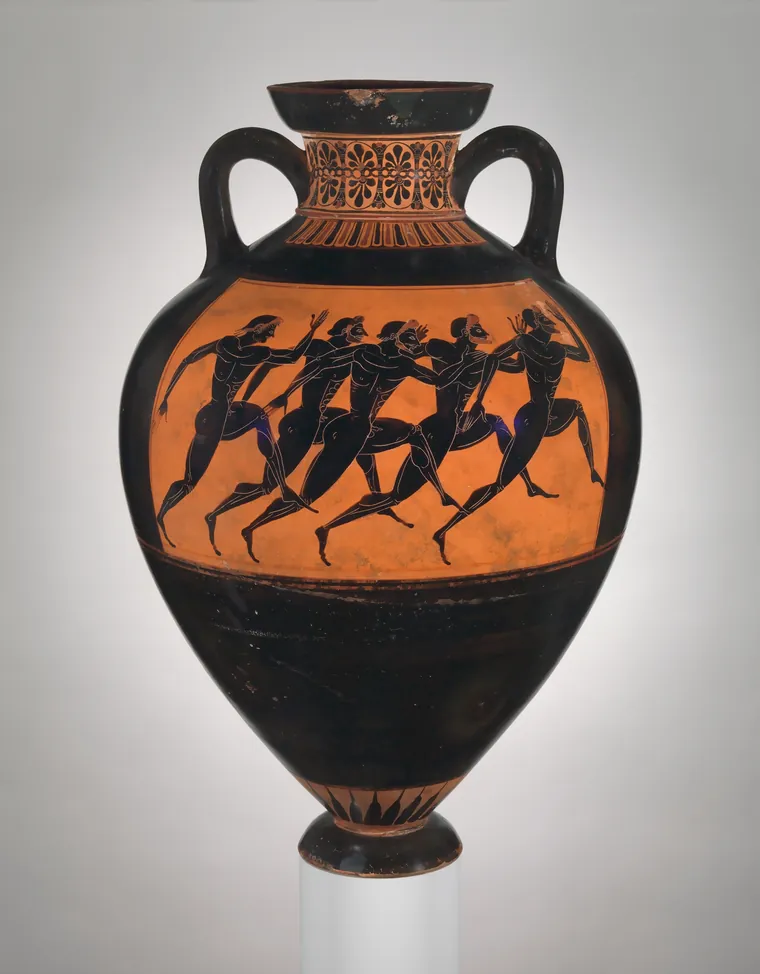
Olive oil nourished the body and was used by athletes, who rubbed it onto their skin before competitions. Victorious athletes could receive crowns made from olive branches, symbols of honour and achievement.
The olive branch itself became an enduring symbol of peace.

The tree represented much more than agricultural productivity. It represented wisdom, prosperity, endurance and the relationship between people and the land.
The Roman world and the expansion of olive oil
The Romans inherited the olive-growing traditions of earlier civilizations and expanded them throughout their territories.
Olive cultivation became an organised agricultural enterprise. Large estates produced oil on a commercial scale, while increasingly sophisticated agricultural techniques improved production.
Olive oil travelled throughout the Roman Empire in amphorae, carried by ships across the Mediterranean and transported along roads connecting distant provinces.
It was used in cooking, food preservation, bathing, personal care and medicine. Oil lamps illuminated homes, streets and temples.
Source: Uses of olive oil in the Roman world (RIVAR, PDF).
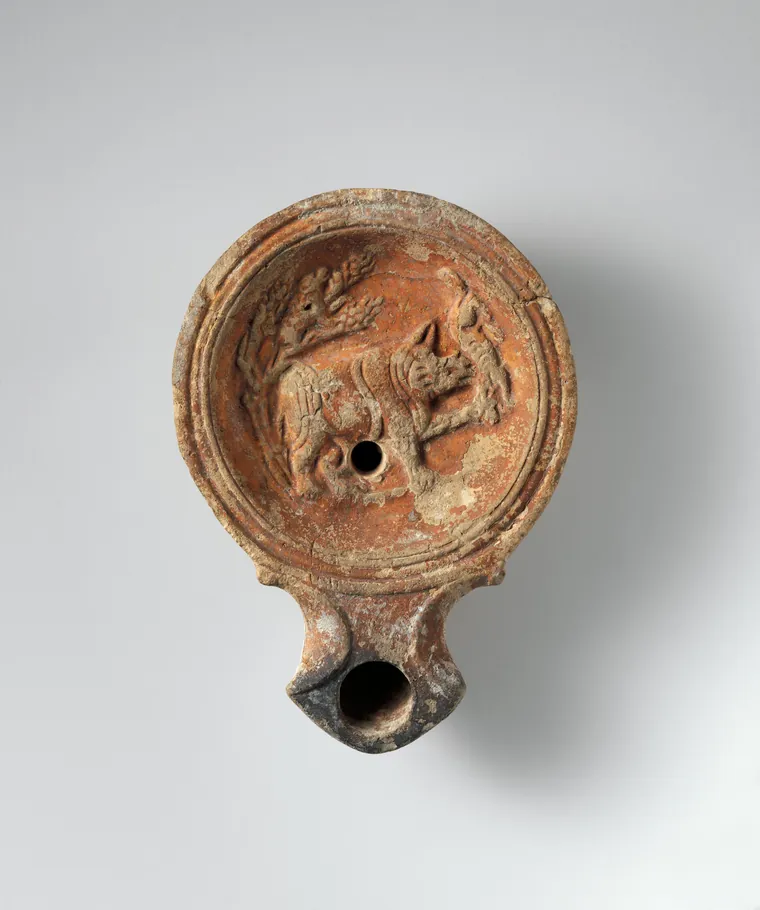
Roman agricultural writers documented the cultivation of olives, including pruning, grafting, harvesting and pressing. Their knowledge helped establish practices that would influence olive farming for centuries.
Across the Mediterranean, landscapes gradually transformed into extensive olive groves.
The olive in Iberia: the evidence from Portugal
The wild olive grew in the Iberian Peninsula before the Roman conquest. At Castro Marim in the Algarve, archaeologists have found evidence of olive growing in the Iron Age. Contact between southern communities and Phoenician traders may have brought more productive varieties. We do not know whether Celtic peoples introduced cultivars in what is now Portugal, or which ones they might have brought.
Sources: The wild olive (University of Porto) · Archaeology at Castro Marim (Frontiers).
In Roman Lusitania, the scale of production changed. At the villa of Milreu in Estoi, archaeologists identified an oil mill with five presses. Its capacity suggests that some of the oil was made for trade.
Source: The Roman mill at Milreu (University of Murcia).
From Gharb al-Andalus to the Portuguese language
Under Moorish rule, part of what is now Portugal belonged to Gharb al-Andalus, the western part of al-Andalus. Near Seville, the agronomist Ibn al-Awwam recorded experiments in grafting wild and cultivated olives. In al-Andalus, people used olive oil for cooking, lighting and preparing remedies. The Portuguese words azeite (olive oil) and azeitona (olive) preserve a trace of that period: both come from Arabic.
Sources: Ibn al-Awwam’s agricultural treatise (Filāḥa Texts Project) · Olive oil in al-Andalus (González Oliva) · Origins of the Portuguese words (Ciberdúvidas).
Passing down local varieties
By the late 14th century, Évora had rules governing the work of olive oil millers. In the groves, generations of farmers adapted their practices to local soils and climates. They selected trees for early cropping, drought tolerance, fruit size, oil yield and quality, then propagated them by grafting. Galega Vulgar carries a record of that past: a genetic study points to western and central Mediterranean ancestry, with contributions from both wild and cultivated olives, but cannot tie the cultivar to any one ancient people.
Sources: Traditional olive growing (Patrimónios) · Genetic study of Galega Vulgar (Frontiers).
Olive names also preserve the memory of rural communities. In 1913, Cândido de Figueiredo’s dictionary recorded Lentrisca as a form of Lentisca and Verdeal as the name of an olive variety and its fruit. Growers in the Serras de Aire e Candeeiros still use the name Lentrisca. Under the spelling Lentisca, it is one of the varieties used in Azeites do Ribatejo PDO.
Sources: Cândido de Figueiredo’s dictionary (1913) · Lentrisca in the Serras de Aire e Candeeiros (Mais Ribatejo) · Azeites do Ribatejo PDO (PTPT).
Verdeal Alentejana, also called Verdeal de Serpa, goes into Azeite de Moura PDO and is used to make cracked green table olives. Verdeal Transmontana, by contrast, is one of the varieties used in Azeite de Trás-os-Montes PDO.
Sources: Verdeal Alentejana profile (Plansel) · Azeite de Trás-os-Montes PDO (PTPT).
In Suçães, near Mirandela, a study published in 2018 documented century-old trees identified as Lentisca, Verdeal and Verdeal Transmontana, among others. They show that the region has grown these varieties for generations, but do not tell us when or by whom they were introduced.
Source: Study of the centenarian olive trees of Suçães (University of León).
Harvest: the beginning of the transformation
Every year, as autumn advances and winter approaches, the olive harvest begins.
It is a moment that brings together the work of an entire season. Months of growth, flowering, fruit development and ripening culminate in the gathering of the olives.
Traditionally, harvesting was a labour-intensive activity involving families and entire communities.
Nets were spread beneath the trees. Olives were picked by hand or carefully removed from branches using traditional tools. The fruit was collected, sorted and transported to the mill.
The timing of the harvest has a significant influence on the character of the resulting oil.
Earlier harvesting often produces oils with greener aromas and greater intensity, while more mature fruit may yield oils with softer characteristics.
The balance between quality, quantity and ripeness has always been one of the decisions facing the olive grower.
The harvest is not simply the collection of fruit.
It is the culmination of an entire year's relationship with the trees.
From olive to oil: the ancient process
Once harvested, the olives must be transformed before they can release their oil.
The first step is cleaning. Leaves, branches, soil and other unwanted material are removed, and the olives are washed.
Then comes crushing.
In ancient mills, heavy stones were used to crush the fruit. Human or animal power moved the grinding equipment, turning the olives into a paste containing pulp, skin, pits and oil.
This paste was then spread onto fibres or woven mats and stacked beneath presses.
Pressure forced the liquid from the paste. The resulting mixture contained both oil and water, which could subsequently be separated.
Because olive oil is lighter than water, it naturally rises to the surface.
Workers carefully collected the precious liquid, separating it from the remaining water and solid material.
The process was labour-intensive, but its fundamental principle remains unchanged today.
The evolution of olive mills
Over centuries, olive extraction machinery evolved.
Stone wheels became larger and more efficient. Wooden presses developed greater mechanical advantage. Screw mechanisms allowed increasingly powerful pressure to be applied to the olive paste.
Water-powered mills reduced the need for human and animal labour.
Later, hydraulic presses transformed traditional extraction, allowing greater quantities of olives to be processed more efficiently.
The industrial revolution brought new materials, machinery and power sources. Modern mills introduced mechanical systems capable of controlling different stages of the process with greater precision.
Today, stainless steel equipment, centrifugal separation and temperature control help improve hygiene, efficiency and consistency.
Yet the essential principle remains remarkably unchanged.
The olives are crushed.
The paste is processed.
The oil is separated.
Thousands of years of technological evolution have refined the process, but the fundamental objective is still to extract the oil while preserving the qualities of the fruit.
Tradition and modern technology
Modern olive mills are very different from their ancient predecessors.
Traditional stone mills and presses have largely been replaced by machinery designed to process olives quickly and hygienically.
Modern extraction systems can control temperature, processing time and separation with considerable precision.
These improvements help preserve the aromas, flavours and chemical characteristics of the oil.
However, technology alone cannot guarantee quality.
The condition of the olives, the timing of the harvest, the cleanliness of the equipment and the care taken throughout the process remain fundamental.
The finest olive oil begins in the grove, long before the fruit reaches the mill.
It is the result of healthy trees, careful harvesting, fresh olives and a process designed to respect the fruit.
What sets oils apart in composition, aroma and the kitchen.
Ancient trees and living heritage
Across the Mediterranean, some olive trees have survived for extraordinary periods.
Their trunks may be twisted, hollow or divided into enormous branches. Their shapes reflect centuries of growth, pruning, damage and regeneration.
The hollow interior of an ancient olive tree is not necessarily a sign of weakness. In many cases, the living tissues surrounding the trunk continue to grow even as the central wood gradually decays.
These trees demonstrate an extraordinary ability to survive.
They have endured droughts, storms, changes in ownership, agricultural transformations and the passing of generations.
Their age cannot always be established precisely. The growth of olive trees varies considerably, and hollow trunks make traditional methods of estimating age particularly difficult.
Size, structure and historical context still offer clues. In Portugal’s traditional groves, trees continue to bear fruit after centuries; some may date to the Middle Ages or antiquity. The Mouchão olive in Mouriscas, Abrantes, is estimated to be about 3,350 years old. If that estimate is right, it was already growing around 1300 BCE, when Bronze Age communities lived along the Middle Tagus, long before Roman or Moorish rule. If someone planted it, a farmer from one of those communities is a possibility. Age alone is not proof: it could have started as a wild olive and been tended or grafted later.
Sources: The Mouchão olive tree (Tree of the Year) · Dating ancient olive trees (CSIC) · Recent Prehistory and Protohistory in Abrantes and Constância (Middle Tagus).
An ancient olive tree is not merely an agricultural asset.
It is living heritage.
The relationship between people and olive trees
For generations, olive growers have lived according to the rhythm of the trees.
They prune during one season, observe flowering during another, watch the fruit develop through the summer and prepare for harvest as autumn approaches.
The work requires patience.
Olive trees do not respond to hurried decisions. They reward careful management and long-term thinking.
A tree planted today may continue producing fruit long after the person who planted it has passed away.
In this sense, cultivating olives is an act of continuity.
It connects the farmer with those who came before and with those who may inherit the land in the future.
The harvest is a shared experience between generations.
From the grove to the bottle
Every bottle of olive oil represents the culmination of many stages.
It begins with the tree.
It depends on the soil, the weather and the care given throughout the year.
It requires harvesting at the right moment, transporting the fruit carefully and processing it while it remains fresh.
The mill transforms the olives into oil, but the quality of the final product is determined long before extraction begins.
The result is a liquid that carries the character of its origin.
The aromas of fresh olives.
The scent of green leaves.
The warmth of the Mediterranean sun.
The work of the farmer.
And the accumulated knowledge of generations.
A tradition that continues
Today, olive cultivation remains one of the defining agricultural traditions of the Mediterranean.
Modern technology has transformed the way olives are harvested and processed, but the relationship between the tree, the land and the farmer remains essentially the same.
The olive tree continues to grow slowly.
It continues to endure.
It continues to produce fruit.
Some trees are young and vigorous, reaching towards the sky. Others are ancient, their trunks shaped by centuries of survival.
Yet every tree participates in the same cycle.
Flowering.
Fruit development.
Harvest.
Pruning.
Rest.
And renewal.
The legacy of the olive tree
The olive tree is more than a source of food.
It is a symbol of peace, endurance and prosperity.
It is a connection to ancient civilizations and a reminder of the value of patience.
Its oil has illuminated homes, nourished families, accompanied religious ceremonies, travelled across continents and become one of the most important products of Mediterranean culture.
Every harvest continues a tradition thousands of years old.
Every bottle carries a little of that history.
The land.
The climate.
The trees.
The labour.
The knowledge.
And the time itself.
The olive tree is history rooted in the earth, transformed into oil, and carried forward through generations.
Olival da Azenha
Enraizado no Tempo. Crescendo com a Natureza.
Rooted in Time. Growing with Nature.